The Duck Decoy Tradition
The Kooikerhondje’s name comes directly from its original job.
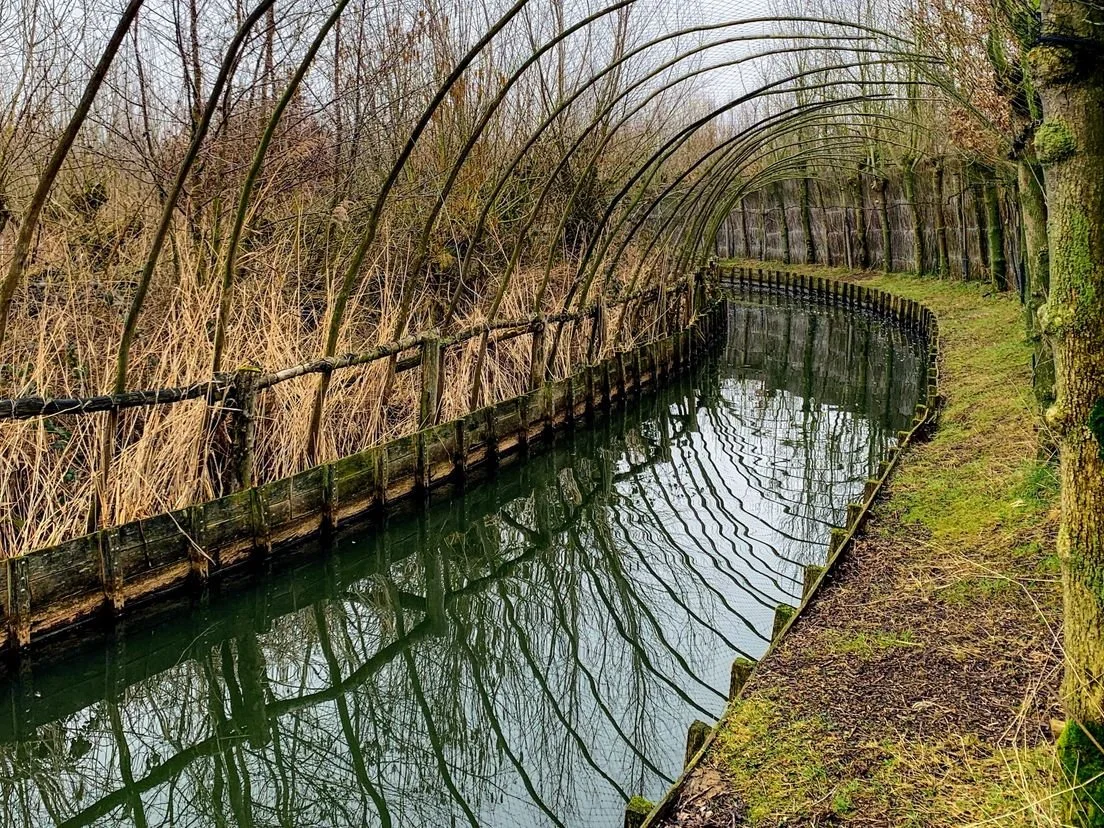
In the Netherlands, traditional duck decoys, called eendenkooien, have existed for over 600 years. These decoys are peaceful ponds surrounded by woodland, with several curved, narrowing channels extending from the water. Each channel, called a pipe, becomes gradually smaller and was historically covered to prevent ducks from escaping.
The goal was not to chase ducks, but to lure them.
This is where the Kooikerhondje played its role.
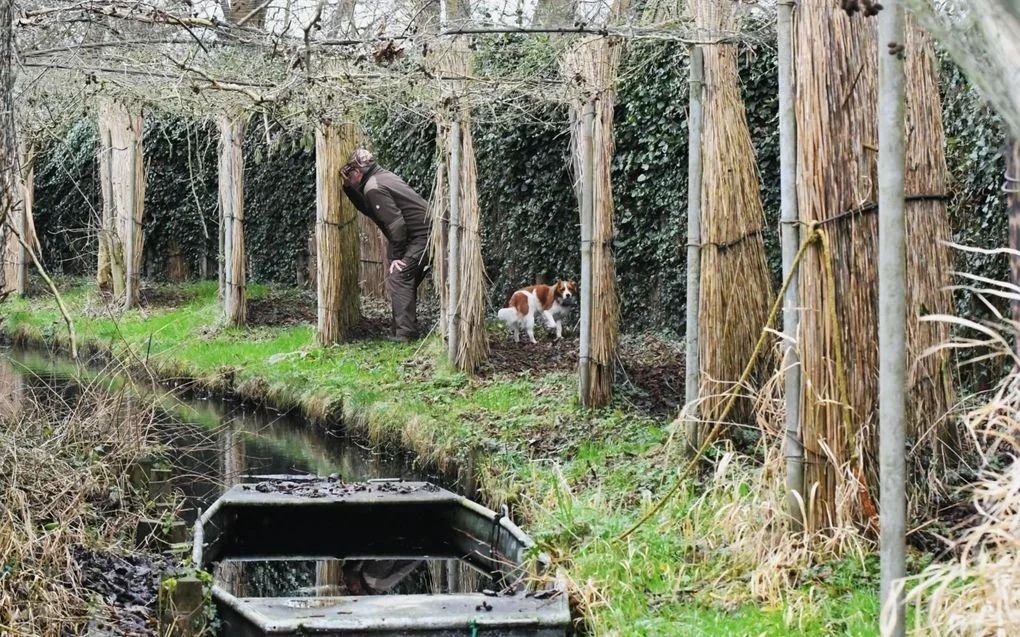
Working alongside the decoy keeper, the dog would move quietly along reed screens beside the water. The ducks would catch glimpses of the dog’s white feathered tail as it moved in and out of view. Curious, they would follow deeper into the narrowing pipe. The dog did not bark, chase, or create chaos. The work required silence, precision, and cooperation.
Communication between the dog and the handler was subtle. Often gestures were used instead of voice commands. The dog had to be attentive, agile, and capable of working independently while still responding to its handler.
When not actively working the eendenkooi, Kooikerhondjes were expected to remain alert. They patrolled the surrounding grounds, warned of intruding humans, dogs, or predators, and hunted rats and other vermin that threatened nesting ducks or food stores. This work required quick intelligence, independence, and confidence.
The breed’s historic job shaped its temperament. The Kooikerhondje needed to be small, quick, observant, quiet, intelligent, and able to turn sharply in tight spaces. It needed stamina and independence, but also loyalty and responsiveness.
Even today, some Dutch duck decoys still operate for scientific bird research, and Kooikerhondjes can still be seen performing the work they were originally bred for.
The breed’s identity is inseparable from this unique tradition.